Food and beverage pairing does not have to follow complicated rules. While professional chefs and sommeliers may spend years studying flavor interactions, anyone can learn the fundamentals by paying attention to a few simple elements: intensity, acidity, sweetness, texture, and preparation style.
A thoughtful pairing can make familiar food taste more interesting and help a beverage feel more balanced alongside a meal. Whether you are planning a casual dinner, preparing a holiday table, hosting friends, or putting together a food-focused gift, understanding these principles gives you more confidence when making choices.
This food and beverage guide explains the basics of pairing and offers practical combinations that work across different meals and occasions.
Understanding the Basics of Food and Beverage Pairing
The purpose of pairing is not necessarily to find two flavors that taste identical. In many of the best combinations, complementary and contrasting characteristics work together.
For example, a crisp beverage can refresh the palate after a rich dish, while a fuller-bodied drink can stand up to strongly seasoned food. Similarly, sweetness can soften heat, while acidity can brighten creamy or fatty ingredients.
Four factors are especially useful when planning a pairing:
- Intensity: Match delicate foods with lighter beverages and substantial dishes with more robust choices.
- Acidity: Acidic beverages can provide freshness and balance rich foods.
- Texture: Creamy, crunchy, oily, and crisp textures influence how a pairing feels on the palate.
- Flavor profile: Consider whether the beverage complements, contrasts, or enhances the dominant flavors in the dish.
There are no absolute rules. Personal preference matters just as much as traditional pairing advice.
Match the Intensity of Food and Beverage
One of the easiest places to begin is intensity.
A light salad with delicate greens, fresh herbs, and a simple vinaigrette can be overwhelmed by a very powerful beverage. On the other hand, a grilled steak may make a delicate drink seem almost flavorless.
Think about the overall weight of the meal.
Light Foods
Fresh vegetables, seafood, salads, mild cheeses, and simply prepared chicken generally work well with refreshing beverages. Crisp white wines, sparkling options, light beers, and unsweetened iced teas can complement these foods without dominating them.
Medium-Intensity Foods
Roasted poultry, pasta with moderate sauces, grilled vegetables, and semi-soft cheeses offer more flexibility. Medium-bodied white wines, rosé, lighter reds, and balanced beers can work particularly well.
Rich and Robust Foods
Steak, barbecue, hearty stews, strongly seasoned dishes, and aged cheeses need beverages with enough character to hold their own. Full-bodied reds, robust beers, and richer non-alcoholic options can provide the necessary balance.
Use Acidity to Balance Rich Foods
Acidity is one of the most useful tools in pairing.
Think about how lemon juice changes the taste of fried fish. The acidity cuts through richness and makes each bite feel fresher. A beverage with noticeable acidity can create a similar effect.
This principle works particularly well with:
- Cream-based pasta
- Fried seafood
- Rich cheeses
- Roasted poultry
- Fatty appetizers
- Creamy sauces
Sauvignon Blanc is a classic example of a wine that can bring freshness to a meal. Its bright acidity and citrus or herbal character can complement dishes such as grilled seafood, goat cheese salads, asparagus, and herb-forward preparations.
For a thoughtful gift centered around this style, a sauvignon blanc gift basket can also be paired with complementary foods such as crackers, mild cheeses, fruit, or savory snacks. The key is to select foods that reinforce the wine’s fresh character rather than overpower it.
Pair Bold Foods With Bold Beverages
When food has deep, concentrated flavors, a stronger beverage often creates better balance.
Cabernet Sauvignon is a useful example. Its structure and tannins make it particularly suitable for hearty dishes such as grilled beef, lamb, roasted meats, and mature cheeses.
Tannins can interact with proteins and fats in meat, which is one reason structured red wines have long been associated with steak and other substantial dishes.
For occasions where gifting is part of the experience, cabernet sauvignon wine gift baskets can make sense when the recipient enjoys full-bodied reds and the basket includes foods capable of standing alongside them. Gourmet cheeses, savory snacks, crackers, and dark chocolate can all provide interesting contrasts or complementary flavors.
The important consideration is not simply choosing a famous variety. Think about the recipient’s preferences and the foods they are likely to enjoy with it.
Explore Complementary and Contrasting Flavors
Pairings generally fall into two broad approaches: complementing flavors or creating contrast.
Complementary Pairings
Complementary pairings bring similar characteristics together.
Examples include:
- Citrus-based seafood with a fresh, acidic white wine
- Nutty cheeses with wines that have subtle oak or nutty notes
- Dark chocolate with rich, fruit-forward red wines
- Herb-roasted vegetables with herbal or mineral-driven beverages
The goal is to create continuity between the food and drink.
Contrasting Pairings
Contrasting combinations use differences to create balance.
Consider spicy food with something slightly sweet. The sweetness can soften the perception of heat. Likewise, a crisp acidic beverage can contrast with a creamy dish and prevent the meal from feeling too heavy.
This approach is particularly useful when a dish has one dominant characteristic, such as richness, spice, saltiness, or sweetness.
Consider How the Food Is Prepared
The ingredients alone do not tell the whole story. Cooking method can dramatically change a food’s flavor.
A raw tomato salad is very different from tomatoes slowly roasted with olive oil and herbs. Grilled chicken has smoky, caramelized notes that steamed chicken does not.
When pairing, consider whether the food is:
- Grilled or smoked
- Roasted
- Fried
- Steamed
- Braised
- Raw or lightly prepared
- Heavily seasoned
Grilling and roasting often add caramelized or smoky flavors, which can call for more substantial beverages. Steaming and poaching preserve delicate flavors and usually benefit from lighter choices.
Sauces deserve special attention too. A simple grilled chicken dish might pair differently with a creamy mushroom sauce than with a spicy tomato sauce.
Pairing Food and Beverages for Different Occasions
The occasion can influence the pairing just as much as the menu.
Casual Gatherings
For relaxed gatherings, versatility is more important than perfection. Choose beverages that can work with several foods rather than trying to create a separate pairing for every dish.
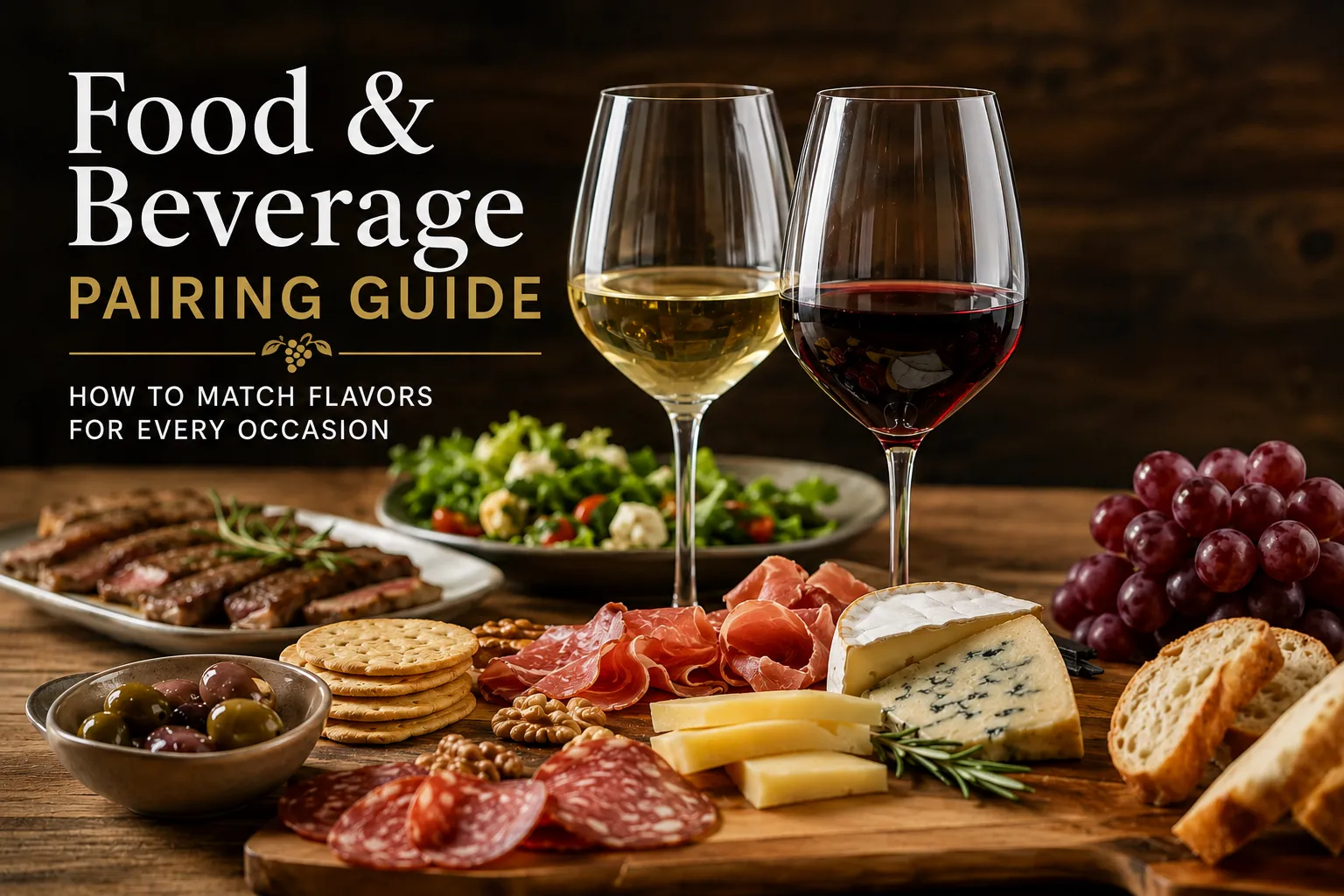
Cheese boards, crackers, roasted nuts, fresh fruit, and savory snacks offer plenty of flexibility.
Dinner Parties
A multi-course dinner gives you an opportunity to change beverages as the flavors become more substantial. Begin with something refreshing, move toward richer choices with the main course, and finish with a suitable dessert pairing.
Keep the transitions gradual so that no beverage feels dramatically heavier than the food before it.
Celebrations and Gifting
When food and beverages are being given as a gift, presentation and compatibility matter together. A beautifully arranged selection can become more useful when the accompanying foods make sense with the featured beverage.
For example, a structured red wine can be accompanied by savory snacks and mature cheeses, while a crisp white can work with lighter crackers, fruit, or delicate cheeses.
This approach turns a gift from simply a collection of products into a small tasting experience.
Don’t Forget Dessert
Dessert pairings can be particularly rewarding because sweetness changes how beverages are perceived.
As a general rule, the beverage should not taste noticeably less sweet than the dessert. Otherwise, the drink can seem flat or overly bitter.
Consider these combinations:
- Dark chocolate with fruit-forward red wine
- Fresh fruit desserts with sparkling or crisp beverages
- Nut-based desserts with richer, nutty flavors
- Light pastries with coffee or tea
- Caramel desserts with beverages offering complementary roasted notes
The texture of dessert matters too. Creamy desserts may benefit from acidity, while dense chocolate desserts can handle richer pairings.
A Simple Formula for Creating Your Own Pairings
If you are unsure where to start, use this five-step method:
- Identify the dominant flavor. Is the dish salty, spicy, sweet, acidic, smoky, or rich?
- Assess its intensity. Decide whether the food is delicate, medium-bodied, or robust.
- Look at the texture. Creamy, oily, crunchy, and tender foods create different pairing opportunities.
- Choose complement or contrast. Decide whether you want the beverage to echo the food or balance it.
- Taste and adjust. Pairing is ultimately experiential, so use your palate rather than relying entirely on rules.
This method works with alcoholic and non-alcoholic beverages alike.
Frequently Asked Questions
What is the most important rule in food and beverage pairing?
Balance is the most useful principle. Consider intensity, acidity, sweetness, texture, and flavor rather than following rigid rules.
Can one beverage work with an entire meal?
Yes. Versatile beverages can work across several courses, particularly when the dishes have moderate flavors. This can also make entertaining easier.
Should food always match the beverage’s flavor?
No. Contrasting flavors can be just as successful as complementary ones. A crisp, acidic beverage alongside a rich dish is a classic example.
How do I choose a beverage for spicy food?
Look for beverages that can balance heat. Depending on the dish, refreshing, slightly sweet, or highly aromatic choices may work especially well.
Conclusion
A successful beverage and food pairing is ultimately about balance, curiosity, and enjoyment. Start by considering the food’s intensity, texture, dominant flavors, acidity, sweetness, and cooking method. Then decide whether you want a complementary match or an interesting contrast.
The best pairings are not necessarily the most complicated. A simple cheese board with a well-matched beverage, a crisp white alongside fresh seafood, or a structured red with grilled meat can demonstrate how small choices make a meal more memorable.
Once you understand the fundamentals, experimentation becomes part of the fun. Taste, compare, adjust, and keep track of combinations you enjoy. Over time, these simple principles can turn everyday meals and special gatherings into more thoughtful culinary experiences.